Twin vs. Full: Which Bed Is Right for You?
The perfect fit.
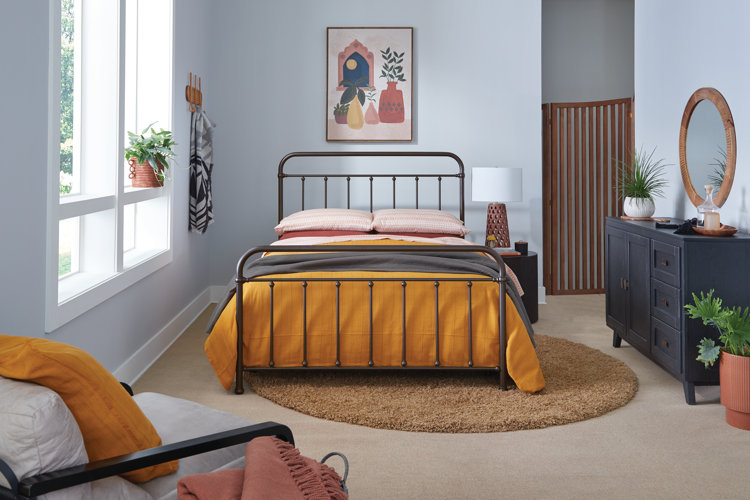
Selecting the right bed size is an important decision that balances your personal sleeping habits with the physical constraints of your bedroom. Learn the key differences between twin vs. full beds so you can find the perfect fit without sacrificing comfort or floor space.
Compare Twin vs. Full Beds: Find the Right Fit
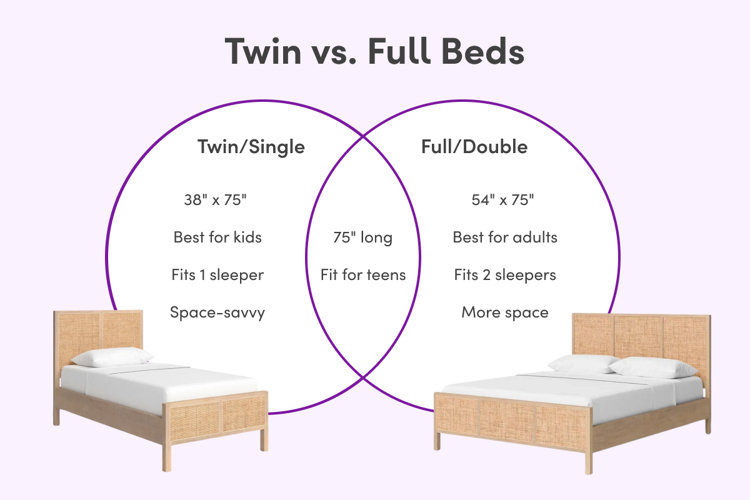
Deciding between a twin and full bed? Here are the benefits and considerations for both so you can see how they stack up.
Twin/Single: Pros & Cons
Dimensions: 38" W x 75" L**
Twin beds, also known as single beds, are 38" wide by 75" tall. They are the ultimate space saver and are commonly found in shared bedrooms, small spaces, and kids rooms. Twin beds can fit one person and are ideal for kids and preteens – typically ages 312. However, their narrow width can feel restrictive to growing teens, adults, and active sleepers. Due to their smaller size, twin beds tend to be more affordable but may be outgrown by children.
Full/Double: Pros & Cons
Dimensions: 54" W x 75" L**
Full beds, or double beds, measure 54" by 75" – the same length as twins but with extra width for more sprawl-space. They are commonly found in teen bedrooms, guest rooms, or small adult bedrooms. Full beds are a comfortable choice for single adults or active sleepers who prefer space to stretch out. While they can fit two sleepers in a pinch, they won’t allow for much extra room. Full beds tend to be more expensive than twin beds, but their extra space can be worth the investment for longevity and comfort.
Tip!
Looking for extra length? Both twin and full beds come in XL sizes, maintaining the same width but extending to 80" in length to accommodate taller sleepers.
Still unsure if a twin vs. full bed is right for your space? Read through the scenarios below to help you decide:
You should opt for a twin bed if:
- You’re furnishing a room for a child between the ages of 3–12.
- You’re upgrading your child’s mattress from a toddler bed.
- You have a small bedroom that is less than 9' × 9'.
- You’re creating a shared bedroom space.
- You want to preserve floor space for other bedroom furniture.
- You have a tight budget.
You should choose a full bed if:
- You’re furnishing a room for a teenager or young adult.
- You’re an active sleeper and need space to spread out.
- Your bedroom is at least 10' × 10' or larger.
- You’re creating a guest room or small primary bedroom.
- You occasionally share your bed with a partner or pet.
- You have more budget to play with.
Frequently Asked Questions
When should kids upgrade from twin- to full-size beds?
Twin beds are a safe choice for young kids and preteens between the ages of 3 and 12. Typically, parents opt to upgrade their kids bed to a full-size bed during their teenage years when they begin growing rapidly.
Can two adults comfortably share a full-size bed?
While full beds are called “doubles,” they can be tight for two people. A full bed is adequate for couples who don’t mind close quarters, but most pairs find queen beds to be better for long-term sleeping arrangements.
Are full-size beds more expensive than twins?
Full-size bed frames and mattresses are more expensive than twins due to their size. You can expect to pay between $50 – $150 more for a full-size mattress. Bedding for full beds can be another additional cost.
Can a full bed fit in a 10' x 10' bedroom?
Yes, a full bed measuring 54" x 75" can comfortably fit in a 10' x 10' bedroom with room for a nightstand and dresser. If you require additional bedroom furniture, a twin bed may be a better choice to maintain walking room.
Tip!
Curious about other bed sizes? Read our related articles to help you find the right fit:
- What Are the Most Common Bed Sizes?
- How to Find the Right Bed Size for Your Space
- Double Bed vs. Queen Bed: What Are the Differences?
