Types of Exterior Shutters: How to Choose the Right Ones
It’s all about the details.
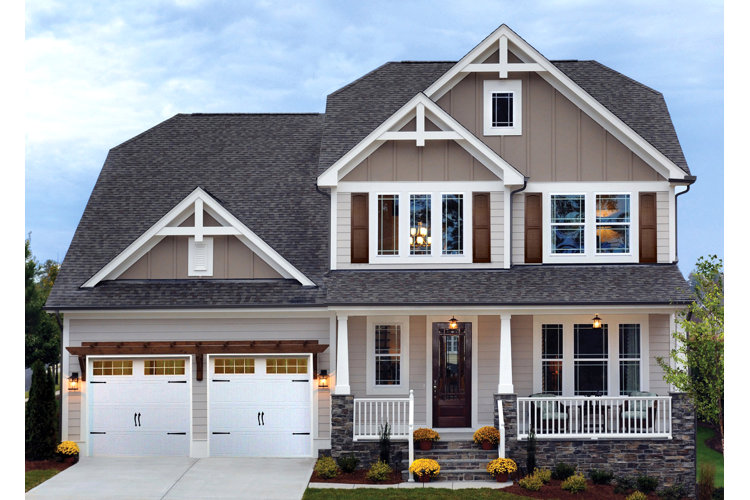
Adding exterior shutters is an easy way to add architectural interest and dimension to your home. Find out how to buy the perfect shutters for your home with our help. We’ll walk you through the types of exterior shutters and materials to choose from.
Types of Exterior Shutters
There are five types of exterior shutters: louvered, raised panel, flat panel, board and batten, and bahama and bermuda. When choosing which type of exterior shutter your home should have, consider factors like proper size, preferred style, security, or protection from the elements.

Louvered: These shutters have angled slats that allow light and a breeze to pass through. Louvered shutters have a well-known and defined look, suiting any exterior. However, they’re traditionally paired with colonial, Victorian, Italianate, and other traditional style homes. Louvered shutters are fixed to the side of the window.
Raised Panel: This style of shutters resembles the look of doors or kitchen cabinets. Since these have a simple design, they work well with country-cottage style homes.
Board & Batten: This style of shutter features one to four boards held together by a cross panel (battens), either placed horizontally or at an angle across the front. Because of their simplicity, these work well on brick or stone siding or farmhouse style homes.
Bahama & Bermuda: Bahama shutters are louvered shutters that are fixed to the top of the window instead of the side. These are typically used in tropical areas to protect windows from storms and wind debris. They also shade rooms from direct sunlight and strong winds.
Flat Panel: Also called shaker shutters, these have flat, solid panels. They are great for blocking out bad weather and bright lights. Regarding style, they work well with any home, but are popularly found on country-cottage and modern homes.
Materials
Vinyl: Vinyl is the most affordable material for shutters. Made from hollow PVC, these shutters are lightweight, moisture-resistant, and low maintenance. They are also resistant to fading, rotting, and cracking. They are plastic in appearance, so if they’ll be placed on lower floors where they’re more visible, you may want to opt for a wood-grain finish to replicate the look of real wood. These are paired well with vinyl siding.
Wood: Wood shutters provide a classic and elegant look to your home. They work especially well with a traditional exterior. Wood shutters can also be trimmed down slightly for unique window dimensions. Since wood naturally ages, you’ll need to seal them yearly for the best appearance and durability.
Composite Wood: Also called faux wood, this material has a wood-like feel, while requiring much less maintenance than real wood. Composite wood is a great option for very tall or wide shutters because it has high durability and stiffness. This also costs less than regular wood and comes in a variety of styles.
Shutter Hardware
Hardware is not necessary if you’re installing shutters for purely decorative purposes. However, decorative hinges and hooks can add a level of sophistication to your home and make the job look complete. For functional shutters, check to see if the necessary hardware is included. This information is under a product’s specifications.
Measure and Install
To learn how to measure and install shutters, read our "How to Measure for Shutters" and "How to Install Shutters" guides!
