Types of Kitchen Knives 101
Learn which knife to use for cutting, chopping, slicing, or peeling.
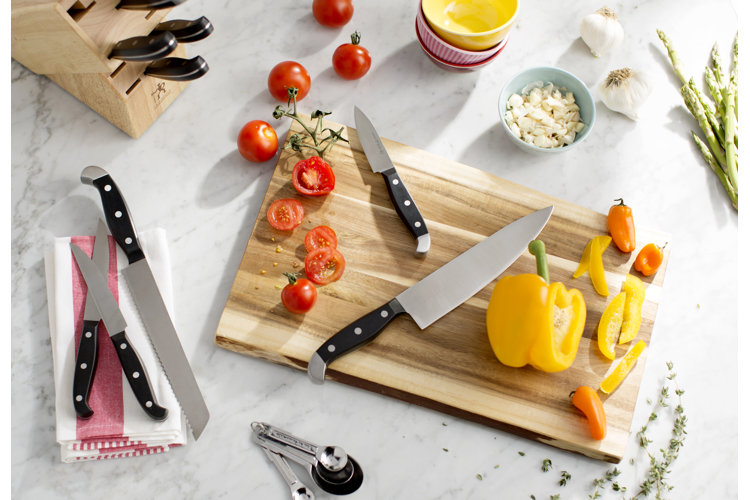
Kitchen knives are indispensable tools for chefs of every skill level. Understanding the different types of kitchen knives and their specific uses is the first step in elevating your culinary game. Once you familiarize yourself with each available option, you can stock your kitchen with the best type for your cooking needs.
Types of Knives
Kitchen Knife Materials
Complementary Pieces
Types of Knives
Using the right type of kitchen knife is crucial for effectively slicing, peeling, or cutting food. The right knife can also promote your safety in the kitchen, as each blade is designed to cut through a specific material and prevent slipping. Review this list to learn about the variety of kitchen knives you need for all of your cooking activities.
1. Chef's Knife
2. Carving/Slicing Knife
3. Steak Knife
4. Paring Knife
5. Utility Knife
6. Santoku Knife
7. Bread Knife
8. Boning Knife
9. Cleaver/Butcher Knife
10. Tomato or Specialty Fruit & Vegetable Knives
1. Chef's Knife
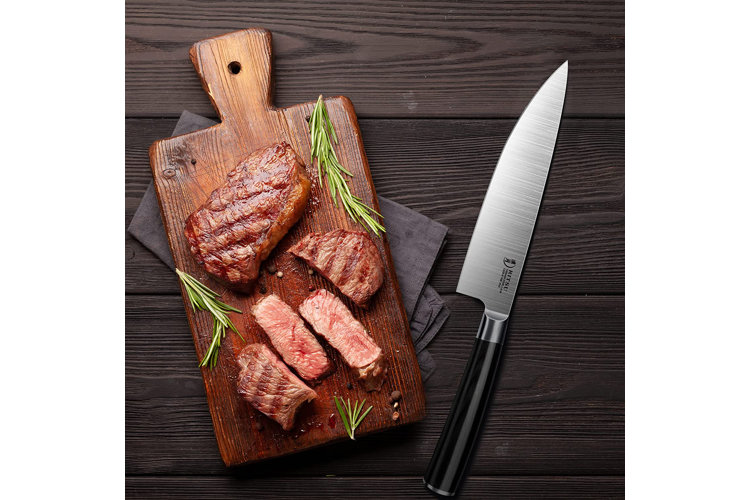
A chef’s knife, sometimes called a French knife or cook’s knife, is a versatile, all-purpose tool and a staple in any kitchen. Its blade typically ranges from 6 to 12 inches long, making it well-suited for a wide variety of tasks. Use a chef’s knife for chopping, slicing, and dicing thicker cuts of fruits, vegetables, and meats.
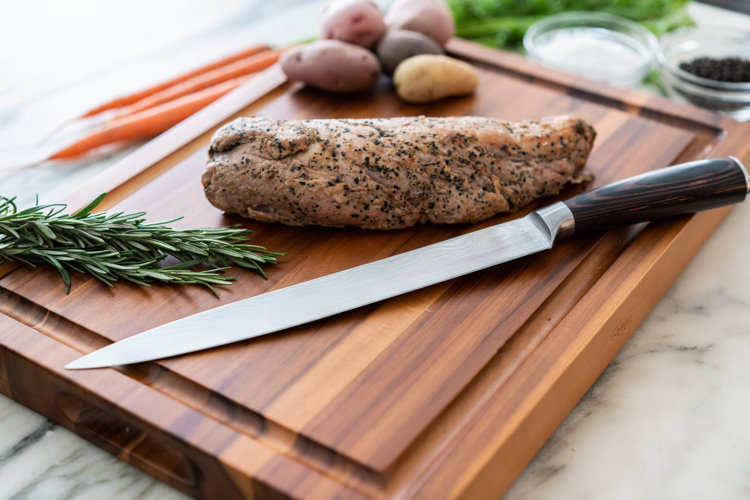
Designed for precision rather than versatility, a carving or slicing knife features a long, narrow blade that helps create thin, even cuts. These knives are commonly paired with a carving fork and may have a smooth or beveled edge, with flexibility varying based on the intended use. Most blades fall between 8 and 15 inches in length. Reach for this style when carving roasts or poultry, or when breaking down larger fish.
Steak knives are designed for cutting through cooked meats at the table, making them an essential part of everyday place settings. They typically feature serrated blades with saw-like edges, though thickness can vary by style. Most steak knives have blades that measure between 4 and 6 inches long and are often sold in sets of four to six. Use them for slicing into individual portions of main dishes, like steak, chicken, or pork.
Compact and easy to control, a paring knife is ideal for more detailed kitchen tasks. It features a short, sharp blade, typically 3 to 5 inches long, with a gently curved cutting edge that allows for precise movements. Its lightweight design makes it especially useful for handling smaller ingredients. Choose a paring knife when peeling, coring, mincing, or making other intricate cuts.
Falling between a chef’s knife and a paring knife in both size and function, a utility knife is a go-to for everyday prep work. The smaller, lightweight design makes it easy to handle, while the blade, typically 4 to 7 inches long, offers more versatility than a paring knife without the bulk of a larger blade. A utility knife is best for slicing and prepping medium-sized fruits and vegetables.
A santoku knife stands out for its compact shape and ultra-precise feel, making it a favorite for detail-focused prep. Shorter and thinner than a traditional chef’s knife, its blade typically measures between 4 and 7 inches and has a flat edge that encourages straight, controlled cuts. Instead of rocking, this knife excels at quick, clean slicing. It’s especially useful for finely chopping ingredients or butterflying poultry.
A bread knife is easy to spot thanks to its jagged, serrated edge, which works like a saw to cut through tough exteriors without squishing what’s inside. The blade is typically longer, around 8 to 10 inches, to handle wider loaves and larger items. Unlike straight-edge knives, it can be trickier to sharpen at home. This type of knife is best for slicing foods with a crisp crust and soft interior, like artisan bread.
Made for precision work, a boning knife has a slim profile that allows it to move easily around bones and joints, and blade flexibility can vary. Some are more rigid for larger cuts of meat, while others are more flexible for delicate tasks. Most fall in the 4 to 7 inch range, giving you control without too much bulk. Use a boning knife to separate meat from bone, such as trimming a ham or breaking down cuts of poultry.
A cleaver, sometimes called a butcher knife, is built for heavy-duty prep. Its broad, rectangular blade is thick and weighty, giving it the power to cut through tough ingredients. The flat side can also be used to crush foods like garlic or ginger. Most cleavers have blades around 6 to 7 inches long. This knife is ideal for breaking down large cuts of meat, cutting through bone, and trimming excess fat.
Designed for delicate produce, a fruit and vegetable knife features a thin, lightweight blade that allows for clean, precise cuts. Many styles include a fine serrated edge and a slightly upturned tip, which helps glide through soft skins without damaging the flesh. The blade is typically around 4.75 to 5 inches long, making it easy to control during detailed prep. Use this knife for slicing tender fruits and vegetables, like tomatoes, or for creating neat, uniform cuts for salads and cooking.
Tip!
Instead of the dishwasher, cooking knives should be cleaned with hot water, soap, and a non-abrasive scrubber, like a sponge. Knives should never go in the dishwasher because the force of the water can dull the blade and may cause handles to warp.
Kitchen Knife Materials
Kitchen knives come in a variety of materials, which can affect their price-point, ability to stay sharp, and overall durability. Review these materials to determine the best options for your needs.
- High-Carbon Stainless Steel: High-carbon stainless steel is the most popular steel type for high-quality kitchen cutlery. It is very durable and will maintain a sharp edge even after some wear. When dried immediately it also resists stains.
- Stainless Steel: In spite of its name, stainless steel isn’t resistant to rust and stains, and does require some upkeep to remain in good condition. Stainless steel knives dull faster than high-carbon stainless options, but they’re a popular knife set inclusion as they are relatively inexpensive.
- Damascus: Damascus metal is a type of steel. Damascus knives have a unique textured blade and are known for staying sharp because of their high-quality steel. These knives are more expensive than other types due to their razor-sharp blades and aesthetic appeal.
- Carbon Steel: Carbon-steel blades are for the pros – they are super sharp and ultra precise, but require a lot of upkeep and regular sharpening.
With a better understanding of the different types of kitchen knives, here are some handy knife accessories that may enhance your cooking experience.
- Knife Sharpeners: From traditional honing steels to electric sharpeners, these tools help maintain your blades and keep them performing at their best.
- Knife Blocks & Storage: Keep your blades safe and dry with a knife block or drawer storage tray.
- Cutting Boards: Protect your counter or tabletop while chopping or slicing with a cutting board. Cutting boards come in a variety of sizes, shapes, and materials, so you’re sure to find one that best suits your needs.
- Scissors & Kitchen Shears: Easily cut through poultry joints and open stubborn packages with these versatile, multipurpose tools.
