Cleaning 101: How to Clean a Leather Sofa
Leather care made easy.
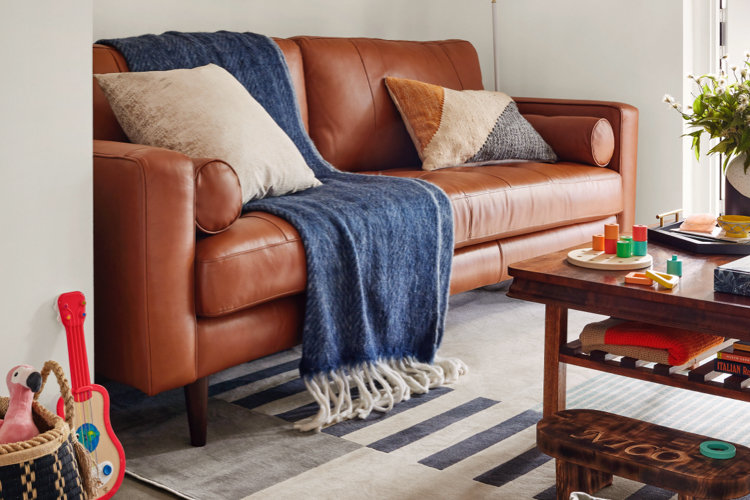
If you’re concerned about maintaining a new leather sofa, set your worries to rest. This timeless material is surprisingly low-maintenance and durable. With the proper care, it will look like new for years to come. Follow our easy steps below to learn how to clean a leather sofa.
What You’ll Need
- Vacuum
- Distilled water (8 parts)
- Mild, non-detergent soap (1 part)
- Microfiber cloths
- Leather cleaner
- Leather conditioner
How to Clean a Leather Sofa: Step by Step

1. Identify the Type of Leather
What type of leather your sofa is made of will dictate how you should clean it. Semi-aniline and pigmented leather can withstand tougher cleanings due to a protective top layer. Unfinished aniline leather is more delicate and should be treated carefully. You can generally identify semi-aniline leather by its stiffer feel and shinier finish, while aniline leather is softer with a matte finish. If you’re having trouble identifying the type of leather, check your sofa’s tag or the manufacturer’s website.
Tip!
For more information of the different types of leather, check out our guide: Furniture Types 101: Your Guide to Leather Types for Furniture
2. Vacuum Any Debris
Leather sofas are easier to keep clean of everyday dust and debris than fabric upholstery because they don’t have the woven texture that clings to crumbs, dander, and pet fur. For a simple routine cleaning, use a handheld vacuum to your sofa to remove any large particles. A soft brush attachment on your vacuum will be the gentlest on genuine leather.
3. Soak Up Spots & Spills
To prevent stains, try to absorb any spills before they soak into your leather upholstery. If you don’t catch them in time, dampen a microfiber cloth with distilled water and dab the stained area. Avoid heat sources and let the sofa air dry. For pure, unfinished leather, wiping down the entire area with a damp cloth can help prevent water lines after drying.
4. Tackle Deeper Stains
For a deeper stain on semi-aniline leather, mix mild, unscented soap and lukewarm water and use a cloth to rub it into the upholstery in circular motions. Always apply the solution to the cloth first, not directly to the leather. Try absorbing oil-based stains with baking soda or ink stains with diluted rubbing alcohol. Wipe the cleaning solutions off with a clean cloth and allow the upholstery to air dry.
For pure aniline leather, never use tap water, oils, conditioners, or detergents to clean your sofa, as these materials can permanently damage the unfinished upholstery. There are foam cleaners and scrub brushes specially designed for use on aniline leather if that applies to you.
5. Buff Out Any Scratches
For small scuff marks and scratches, simply rub your finger over the blemishes. The natural oils in the leather will take care of the rest. If this doesn’t work, use a clean cloth and leather oil or conditioner to buff the scuffs. Deep cuts in the material would likely require repair by a professional.
6. Protect Against Future Damage
Genuine leather is a natural material that will dry out, become brittle, and crack over time in low humidity. After each general cleaning, prevent damage, restore shine, and keep your leather furniture soft and supple by applying a manufacturer-recommended conditioner once or twice a year. Start with a damp cloth and apply the conditioner using circular motions starting at the top of the couch and working your way down. Let it sit overnight before buffing the leather with a clean cloth in the morning. Further protect your leather furniture by keeping it out of direct sunlight and away from heat sources to prevent fading, cracking, and flaking.
