Deck vs. Patio: Which Is Right For Your Backyard?
Take your outdoor entertaining to the next level.
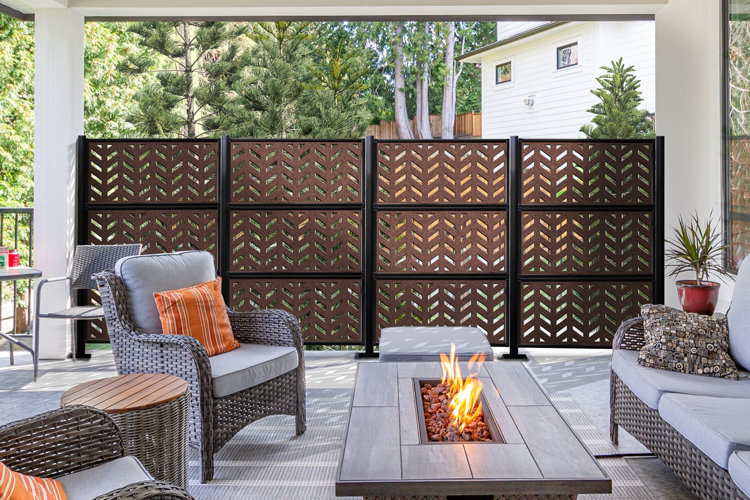
If you are looking to spend more time outdoors, both decks and patios are fantastic options for turning your exterior space into a more inviting area. While they both serve similar purposes – offering a dedicated spot for you to entertain guests, enjoy meals, or relax in the fresh air, they do also have some fundamental differences that set them apart from one another. So keep reading to find out more about the distinction between a deck vs. patio so you can better understand which will suit both your lifestyle and backyard better.
Tip!
If you are more interested in porches, read Porch vs. Patio: Which One Is Right for You? for an in-depth look at the two.
Deck vs. Patio: What Is the Difference?
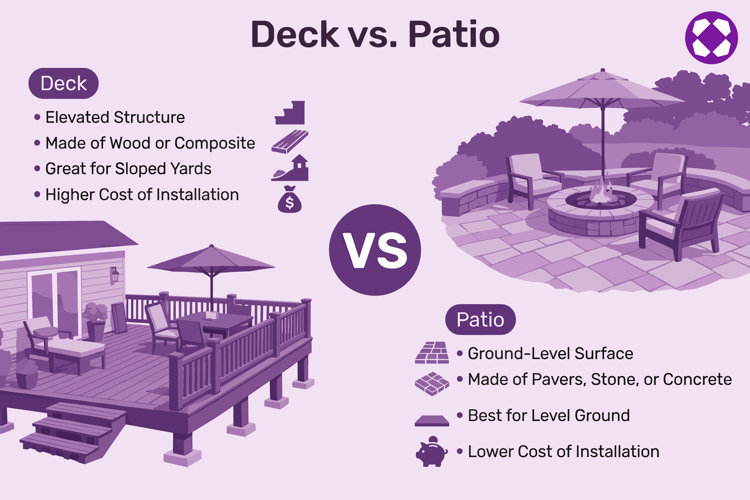
While both decks and patios are designed to become an extension of your living space to the outdoors and to add aesthetic appeal to your house, their primary difference is their elevation. Decks are raised above the ground, usually featuring a constructed frame that can handle a range of terrains, while patios are placed directly on the ground that has been graded to become flat and level.
Deck
A deck is a flat raised structure with a solid framework. It is elevated to offer a view of the surrounding area, which is especially ideal if you live near a body of water, a forest, or mountains.
- Most decks feature stairs and/or rails for accessibility.
- It can be built low to the ground (but still raised) or elevated higher in the air.
- Some decks are attached to the exterior structure of the home and therefore require building permits and inspections to ensure that everything is up to code and structurally sound.
- Decks often increase the resale value of your home – especially if you live in an area where people spend more time outdoors and have a beautiful view.
- If your backyard has uneven terrain or is situated on a large slope, a deck will work best for that landscape. This is because the structure can be built to accommodate the area by the use of longer and shorter legs along with braces and joists to ensure it is all stable and sturdy while maintaining an even surface on top.
- A deck can be customized to expand your living space into the outdoors. By adding decor like an outdoor rug, a grill, and patio furniture, and even painting or staining yours in colors that match your home, you will be able to create a seamless experience.
- Decks typically need to be built by a professional contractor with experience in construction as they are often architectural safety concerns that must be addressed.
Patio
A patio is a paved area that is typically placed or built directly into the ground. Patios are more private, especially when they are enclosed with a wall or a roof.
- They are designed as a private outdoor space without a focus on the view or surroundings.
- Since patios are placed flushed with the ground, they typically don't require any permits as they don't require any building or affect the home's structure.
- Patios cost less to install (especially upfront) and require less maintenance since you only need to sweep or wash them down with a hose.
Deck vs. Patio Installations: What Are The Differences?
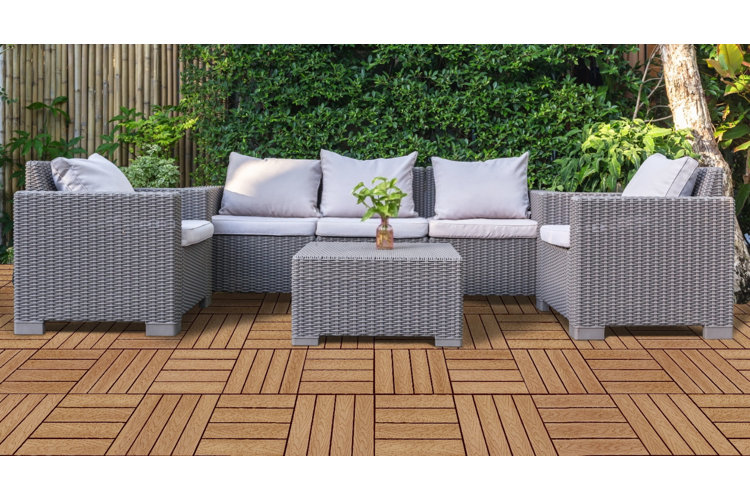
Deck and patio installations are significantly different. You need to assess your land to determine if it is better suited to accommodate a deck or a patio. Additional costs and considerations need to be taken into account to ensure you are selecting the right option for your budget, landscape, and time.
Deck vs. Patio: Materials
Deck: More often than not, decks are made from wood, composite or engineered wood, plastic, and even metal. Pressure treated wood is the most common material used, along with the nails and screws required to build these structures.
Patio: Patios are typically made from more budget-friendly materials such as pavers, stones, and poured concrete. They can also comprise brick or tile as these can easily be placed directly on the ground. No screws or frameworks are needed.
Deck vs. Patio: Cost
The cost of building decks and patios varies greatly due to not only the materials but also the varying amount of work each requires.
Deck: The process of building a deck is often multi-day as it not only needs professional planning but also the construction of a sturdy framework before any decking boards can be laid.
- The upfront cost differs based on material but will have a higher price tag than a patio.
- This also includes labor, planning, permits, and extras like stairs and railings.
- You can expect to pay around $30 to $60 per square foot, including the permit and inspection fees (around $4,100 to $11,600 but can increase based on the cost of the professional you hire).
Patio: These require less time and can typically be built as a weekend DIY project without the help of a professional. Since all you really need is level ground and your paving material (no frames or permits required), patios tend to cost less.
Building a patio will only require a budget of between $8 to $20 per square foot, especially if you use more affordable materials like concrete and stone.
Tip!
Want to DIY your Patio? Read our guide on installing patio pavers here.
Deck vs. Patio: Maintenance & Durability
Deck: When made from wood, decks will typically quire additional maintenance. Sealing, painting, staining, and power washing may be required depending on the material your deck is composed of. It's worth noting that composite wood requires less upkeep.
- They are susceptible to fading, discoloration, and weather damage.
- Due to their nature and design, deck repairs can be more extensive and costly, particularly if the damage is structural.
Patio: Maintenance is easier since patios only require dirt and debris removal. That being said, patios are prone to cracking if improperly installed or subjected to extreme temperatures.
Apart from this though, patios can last for years while experiencing minimal damage since they are almost always made from water-resistant and durable materials.
Pros & Cons of a Deck vs. Patio
- Privacy: Decks have less privacy because they are raised and therefore easier to see onto, whereas patios are on the ground and often more hidden from view.
- Space: The layout of your yard will more likely determine which will work best in the space – so you may not be able to choose the one you prefer. A narrow yard could do well with a deck while a patio could wrap around a single story home.
- Location: The landscape will directly affect which can and cannot be installed in your yard. A patio cannot be placed on a hilly landscape, only on even land that can be graded, but a deck can be installed in most places.
- Maintenance: Decks do require extra maintenance, specifically those made from materials like wood, which needs power washing, painting, and staining. Patios can usually handle a little more wear-and-tear, only requiring a sweeping or hose down. (If your patio is made from concrete you will need to regularly inspect it for cracks to prevent water from penetrating and eroding the subsurface).
- Heat: Decks typically absorb less heat than patios – usually because of their material and elevation, making them better suited to hot climates. Patios made from tiles and stone can be hotter in the sun.
- Investment: You will often find that a deck adds more to your home resale value than what a patio does, especially if you use materials like wood or composite and add features like a pergola or awning.
- Customizable: You can paint your deck or stain it in a color that will match or complement your house's appearance,whereas with patios, you are limited to the color of the material you use.
- Permit: It is more than likely that you will need a permit to build a deck due to its size and elevation. Inspections are also a possibility if your deck is connected to your house. Patios simply go into the ground and therefore don't usually need any inspection or permits.
- View: Depending on its position, decks can be designed to allow you a beautiful and scenic view of the land around you, where patios are more for enjoying the privacy of your yard and the outdoors.
- Lifespan: If your deck is made from wood, it will likely have a shorter lifespan than a patio since wood is more susceptible to the elements, especially when not properly maintained and treated. Patios are made from more durable materials like stone and concrete.
- Cost: Due to the amount of work, materials, and extras, a deck will usually cost more than a patio.
- Weight Restrictions: Since they are raised, decks have weight restrictions that their frames/fountain can support. So if you are looking to place a hot tub or on yours, you need to ensure it is equipped to hold those things along with the weight of you and your guests while remaining stable. Patios are at ground level so they are less likely to bend or cave in due to excess weight.
- Height: Some areas may have height restrictions which will limit how tall you can construct your deck, whereas a patio is simply flat on the ground.
- Landscaping: You can build a deck wherever it is feasible but a patio requires landscaping to ensure the land is level and to look its best. Read DIY Landscaping: Your Step-by-Step Guide for tips.
You Might Also Like
Now that you know the difference between a deck vs. patio, you can give your backyard the upgrade it's been needing.
