Your Ultimate Guide to Window Treatments
Everything you need to know about curtains, blinds, and more.
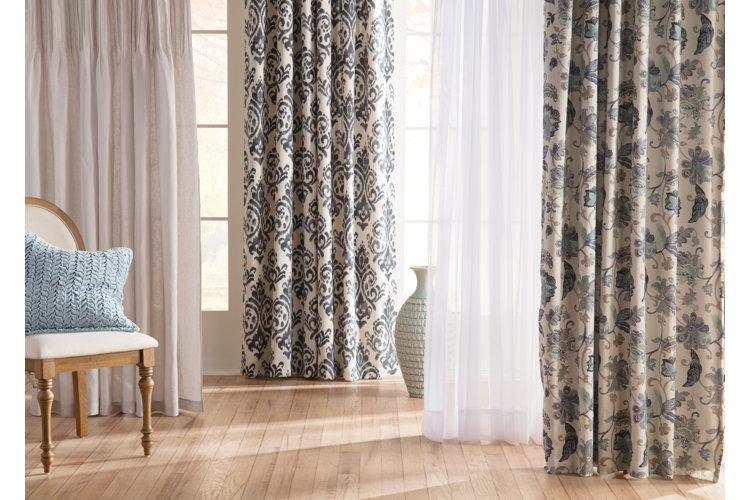
Window treatments are your secret weapon to transforming any space. Control light, create drama, and add a pop of your personality with the right fixture. Read on for a comprehensive guide on types of window treatments so you can choose the perfect accessory for your home.
Curtains & Drapes
Blinds & Shades
Window Valances
Hardware & Accessories
Curtains & Drapes
1. Differentiate Between Curtains & Drapes
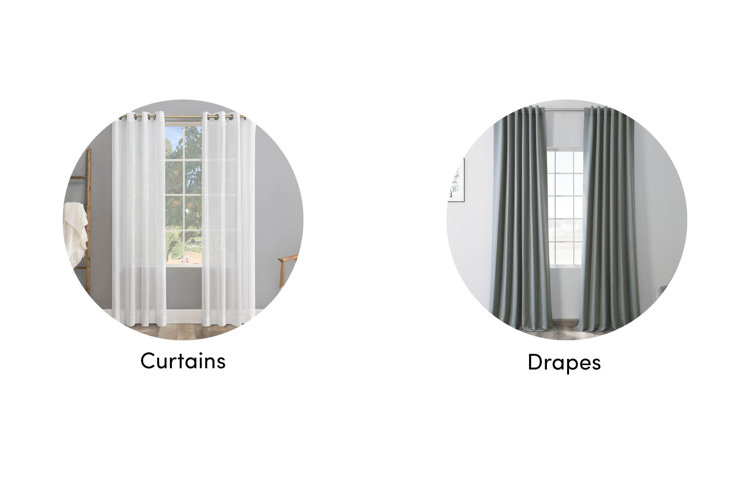
Curtains and drapes are similar, but they're not the same. Curtains are typically made of lightweight materials while drapes are heavier with a more formal appearance. Learn more about the differences and discover which one is the best window treatment for your home in Window Treatments 101: Curtains vs. Drapes.
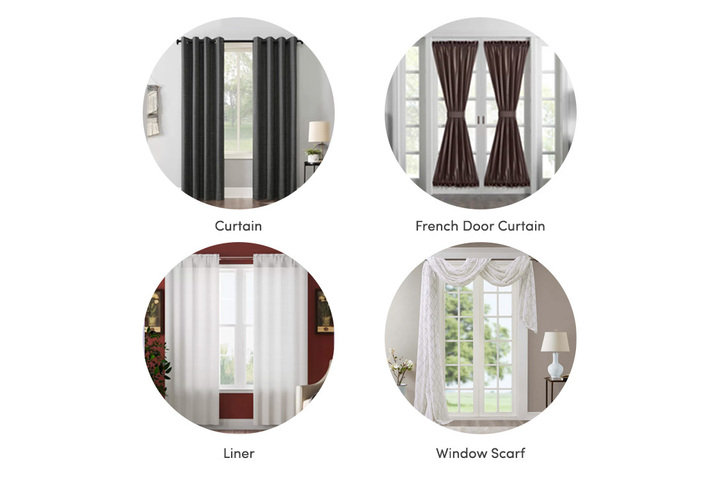
Curtain/Drape: This standard window treatment is made up of two or more panels of fabric that hang straight down from curtain rods and can be slid left and right.
French Door Curtain: Rather than hanging loosely like standard curtains, French door curtains mount directly to the door at the top and the bottom of the window so they won't swish around when the door moves. They typically come with a tie that can cinch them at the center to allow light through when desired.
Liner: Curtain liners are thick, light-filtering curtains that are made to be used in conjunction with more decorative curtains that may not have the light-filtering capabilities you would like. They hang behind curtains and aren't meant to be visible.
Window Scarf:Window scarves aren’t designed to block out light and are used more for their decorative appearance than their practical application. Window scarves are loosely draped over a curtain rod and can be used alone or over a pair of drapes for a dramatic effect.
Rod Pocket: A long pocket sewn along the entire top edge of these curtains allows the curtain rod to slide through without extra hardware. This style produces stiffer results, as the curtains will generally hold their shape when closed and won't gather much when opened.
Grommet: Also called eyelet headers, grommet-headed curtains have round metal-lined holes (grommets) affixed to their top edges. The curtain rod threads through those grommets. This header style creates wide, flowing folds that lend the curtains a casual or contemporary look.
Pinch Pleat: This style, marked by beautiful stiff pleats, requires additional hardware on top of what is included in a basic curtain rod kit. Clip rings, pin hooks, or back tabs are attached to the curtain to create its pleats and hold them in place. Clip rings and pins come in a wide range of styles, and pleat widths vary from narrow pencil pleats to wide, flat box pleats. Pinch pleats are formal, dramatic, and traditional in appearance.
Tab Top: Tab top curtains don't require any rings or grommets to hang from curtain rods; instead, they hang from fabric tabs sewn into their top edges. Depending on the fabric and width of the tabs, the final look is usually casual and modern.
Sheer: These delicate curtains let the most sunlight through. They can be used alone or layered underneath other curtains. By themselves, sheer curtains provide little privacy and are therefore not recommended for bathrooms or bedrooms.
Semi-Sheer: These curtains are a little thicker than sheer curtains but still won't provide the utmost privacy or light filtration. They work best when layered with other window treatments.
Room-Darkening: Room-darkening curtains are designed to filter out at least 50% of light, adequately darkening a room and providing ample privacy without making it difficult to tell whether it is night or day.
Blackout: Just like their name implies, these curtains block most sunlight from entering the room, darkening the room greatly during the day. They are excellent for privacy and are commonly used in bedrooms of all kinds. Because these work best when they are absolutely flush against the window and wall so no light can peek around them, be sure to measure diligently if you're interested in installing blackout curtains.
Tip!
For styling tips and tricks, check out our guides Window Treatments 101: Layering Curtains & More and How to Choose the Perfect Curtain Color.
Blinds & Shades
1. Differentiate Between Blinds & Shades
Blinds are considered a hard window treatment, as they are made up of a series of hard, interconnected slats. Those slats can be manually angled to allow in different amounts of light. Shades, on the other hand, are usually made of soft materials although they are raised and lowered by the same mechanisms as blinds. However, shades are solid panels rather than slatted, so they can’t be manipulated for different light filtration. Learn more about both by reading our Guide to Choosing Blinds & Shades.
Horizontal: Horizontal blinds have slats running the width of the window and slide up and down to open and close. Many horizontal blinds have adjustable slats so you can decide how much light they let in.
Vertical: The slats of vertical blinds hang down from the top of the window and can either be loose or stationary. The slats, which come in a variety of widths, slide from left to right to cover a window. Most vertical blinds can also be angled to let in different amounts of light.
Mini: Mini blinds function the same way as horizontal blinds but their slates are not as wide – making them a better fit for windows without a deep recess.
Roller: One of the most common shades styles out there, roller shades hang from a roller that rolls them up or down depending on the angle the pull tab is pulled. They are typically made up of one long panel of fabric.
Cellular/Honeycomb: Made up of two layers of accordion-like folds with cells of space between them, cellular (or honeycomb) shades can actually insulate a window against heat loss or gain, depending on the season.
Roman: When pulled up, Roman shades form wide folds that stack atop each other for a neat and regal look. Roman shades are popular window treatments made up of one solid panel that can be raised and lowered using a pull cord.
Roll-Up: Not to be confused with roller shades, roll-up shades roll from the bottom to the top when closing. They include fasteners for you to anchor the shade at your desired height.
Pleated: Pleated shades have a similar look to cellular or honeycomb shades, but they are made with a single layer of paper or fabric. Like roll-up shades, they can be raised to specific heights and anchored with clips.
Tie-Up: Tie-up shades are tied at a fixed height around the middle of your window. To fully cover the window, simply untie the ribbons and let them fall.
Sheer: Sheer blinds are used for light diffusion and to soften harsh glare or shadows in your home. They lightly obscure the view from your window but don’t offer total privacy.
Semi-Sheer: Many blinds and shades are semi-sheer, offering moderate light control and privacy during the day. They are versatile and can be layered with curtains.
Room Darkening: Room-darkening blinds are usually made with heavier materials and provide more privacy and light filtration than sheer or semi-sheer blinds.
Blackout: Blackout blinds are the only blinds that can be relied upon for complete privacy and light blocking without being layered with other window treatments. They are most common in bedrooms and can even help with thermal insulation and sound dampening.
Inside Mount: Inside-mount blinds and shades are attached to the inside of the window casing or frame and sit flush to the window pane. They are the easiest option to use if you plan on layering your blinds with curtains, drapes, or valances.
Outside Mount: Outside-mount blinds attach to the outside of the window frame or on the wall above your window. They are more effective at blocking out light than inside-mount blinds, but they will also cover your window frame.
Window Valance: Valances are short curtains used to cover a curtain rod and the top third of a window pane. They are used as a decorative window treatment and don’t do much in the way of providing privacy or light filtration.
Cafe Curtain: Cafe curtains are mounted in the middle of your window and cover the lower half of the pane to provide some privacy while letting natural light in from above.
Kitchen Curtains: Kitchen curtains are a matching set of valances and cafe curtains that are hung together for a decorative touch that provides moderate privacy.
Swag: Swag valances drape in a curve with a shorter middle section and longer tails on each side – giving them a distinct and elegant look.
Tailored: Tailored valances have a clean, straight hem and simple lines that make them perfect for more modern or minimalist spaces.
Scalloped: Scalloped valances feature a wavy edge that give them a soft and decorative touch in traditional- or farmhouse-style homes.
Ruffled: Ruffled valances have pleated or bunched headers that allow them to fall in soft ruffles for a filly look with added texture.
Tie-Up: Tie-up valances are cinched by ties or ribbons that give them a more casual look and the ability to be adjusted.
Balloon: Balloon valances either drape in round shapes or have a puffed out hem to add volume and drama to your windows.
Pointer: Pointer valances either come to a single point in the center or have several points along the hem that sometimes feature tassels for added elegance.
Single Rod: Single curtain rods are a basic fixture designed to hold one layer of curtains or drapes. They are best used for windows that do not require layering. If you’re hanging heavy fixtures, consider purchasing a thicker rod to prevent bowing.
Double Rod: Double rods are specifically designed to accommodate two layers of curtains. This is the best option if you want to add a decorative drape over a sheer liner for added insulation or light filtration.
Tension Rod: Tension rods use spring mechanisms to stay in place on the inside of a window frame. Since they don’t require hardware to install, they are a great option for renters but are better suited for lightweight window treatments.
Single Bay Window Rod: If you’re hanging curtains in a bay window, look for a curtain rod with joints specifically designed to form to the shape of your bay window. Single bay window rods will support one layer of curtains.
Double Bay Window Rod: Like standard double rods, double bay window curtain rods have the capacity to support two layers of drapery but with the added ability to adjust to the shape of your bay window.
Curtain Track/Rail: Curtain tracks and rails are narrow ceiling-mounted fixtures with built-in gliders to allow your drapes to slide effortlessly. Unlike curtain rods, tracks are usually hidden to create a sleek, minimalist effect.
Mounting Brackets: When you purchase a curtain rod, they typically come with the mounting brackets and hardware required to install them. If you need to purchase additional mounting brackets, be sure to measure the diameter of your curtain rod to ensure a proper fit.
Curtain Rings: Curtain rings help your curtains slide over a curtain rod with ease. If your curtain does not have a rod pocket, grommet, or tab top header, you will likely need to purchase curtain rings separately. They usually come equipped with clips for easy attachment to pinch-pleat curtains.
Curtain Clips: Although most curtain clips come attached to curtain rings, you can buy replacement clips or use them on their own for a sleeker look.
Holdbacks/Tiebacks: Holdbacks and tiebacks allow you to prop your curtains or drapes open to let in the natural light from your window. They often come in decorative designs to add visual interest to your curtains.
Decorative Finials: Many curtain rods come with finials on the ends. Not only do they help keep your curtain in place, but they add a decorative touch as well. You can also purchase finials separately to create a custom look on your curtain rod – just be sure that the finial you choose is compatible with the size of your curtain rod.
Now that you’ve explored all the potential window treatments styles, it’s time to transform your home. Check out Your Guide to Measuring & Hanging Window Treatments for a seamless installation process for curtains, drapes, blinds, or shades.
