How to Choose Compatible Appliances for Your Home: Picking the Right Voltage, Vent Type, & More
Avoid installation surprises.
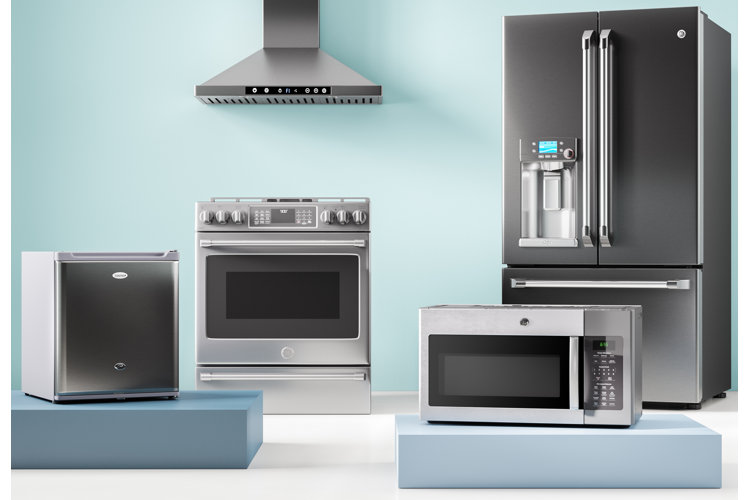
With so many features and designs to choose from, it is easy to overlook simple compatibility issues when shopping for home appliances. In this guide, we explore common customer concerns when purchasing appliances to help you ensure you’re buying one that is compatible with your home.
Refrigerators
Ranges
Range Hoods
Dishwashers
Microwaves
Washing Machines
Dryers
Air Conditioners
Thermostats
Kitchen Appliances
Refrigerators
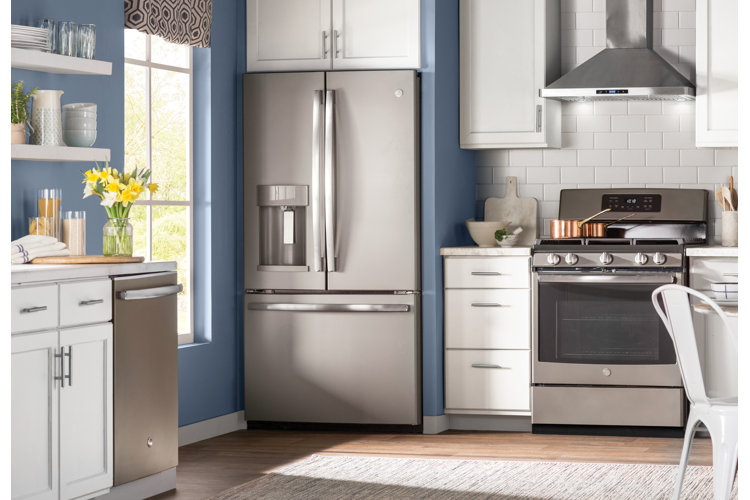
Space Requirements When buying a new refrigerator, it’s important to measure the height, width, and depth of the area where you plan to position it. The height of your appliance should be compatible with your ceilings and fit under your refrigerator surround cabinets if applicable. Whether you’re positioning the appliance between two cabinets or between a cabinet and wall, make sure the width of the refrigerator is smaller than that opening. Refrigerators come in two different depths – counter-depth and standard-depth – which will impact how they align with your kitchen counters. Counter-depth refrigerators are shallower than standard refrigerators (usually around 24" to 28" deep) and are designed for seamless alignment with your cabinets.
Clearance: Before purchasing your refrigerator, don’t forget to factor in a few extra inches of clearance in the back for ventilation, as this will affect the maximum depth measurement of your new refrigerator. You’ll need to ensure there is enough clearance in front of your refrigerator as well to allow the doors to open fully without obstructions. Also ensure that the dimensions of your new appliance will fit through any doors and hallways in your home for an easy delivery and installation process.
Outlet Availability: Most standard refrigerators require a 120V grounded outlet to power them effectively. Depending on where you decide to position your refrigerator, make sure a 120V grounded outlet is easily accessible.
Plumbing Access: Keep in mind that if you’re purchasing a refrigerator with a built-in ice maker or water dispenser, it will need to be connected to a water line. Ensure access to a water line or consider having one installed before your new refrigerator is delivered to simplify the installation process.
For a complete checklist of considerations to make when purchasing a new refrigerator, check out The Ultimate Refrigerator Buying Guide. Also read Refrigerator Dimensions: What is the Standard Size of a Refrigerator? to help you find the right size refrigerator for your kitchen.
Ranges
Installation Type: In addition to measuring your space to determine the proper size range, consider how it will be installed. Slide-in and drop-in ranges are designed for installation between kitchen cabinets, while freestanding ranges can be exposed on the sides. Be sure to choose a range at the same height as your countertops for a seamless installation. Remember that there should be enough clearance to open the oven door in front of the range!
Ventilation Requirements: While having a range hood is recommended for any type of range, they are only technically required for gas and duel-fuel ranges. If you are planning to purchase a gas range, make sure you have a range hood or factor in the cost of installing one to ensure proper ventilation.
Fuel Access: Most electric ranges must be powered by a 240V outlet, while gas ranges require connection to a gas line as well as a standard 120V outlet. Duel-fuel ranges, on the other hand, must have access to both a gas line and a 240V outlet. Ensure the availability of these fuel connections in your kitchen when considering which type of new range to buy.
To learn more about the types of kitchen ranges and their available features, read our guide What Is a Kitchen Range?
Range Hoods
Range Coverage: Measuring your existing range to help you determine the dimensions of your new range hood. A compatible range hood is ideally 3" wider than your range on either side to ensure total coverage. Hoods should be mounted 24" – 36" above your cooktop, but check your hood and range individually for specific clearance information and choose the height of your range hood accordingly.
Vent Type: Depending on the ventilation type, some range hoods may be more compatible with your home than others. Ducted range hoods are vented to the outside of your house and require a connection ductwork. If your kitchen isn’t already equipped with ventilation ducts, you’ll need to have these installed before buying a ducted range hood. On the other hand, ductless hoods filter and recirculate the air back into the kitchen – making for easier installation and providing a flexible option for homes without existing ductwork. When in doubt, you can opt for a convertible hood that can be ducted or ductless depending on how you set it up.
To ensure you find a range hood that is compatible with your other appliances and fits in your space, follow the steps in our guide How to Choose the Best Range Hood For Your Kitchen.
Dishwashers
Plumbing Access: Dishwashers need to be connected to a hot water line and plumbing for drainage. The drainage tubes can typically connect to a kitchen drain or garbage disposal, so check the proximity of your kitchen sink when deciding where to place a dishwasher. If you don’t have a hot water line connection in your kitchen, you’ll need to have one installed so your dishwasher can work effectively.
Electrical Compatibility: Most dishwashers require a 120V grounded outlet to run. They can be plugged in – usually to an outlet under the sink – or hardwired by a professional for built-in styles. Either way, ensure your dishwasher is connected to a dedicated 15–20 amp circuit to prevent electrical overloads.
Space Requirements: Measure the designated space under your counters to ensure you purchase a dishwasher that is compatible with your space. Generally, dishwashers are 35" tall and designed to fit under standard-height kitchen counters. If you have custom cabinets, however, be sure to double-check the height of the dishwasher and your counters before installation. Standard dishwashers are 24" wide, but they also come in 18" compact versions.
For more helpful tips for buying your new dishwasher, read our Dishwasher Buying Guide: Dishwasher Types & Sizes.
Microwaves
Installation Type: Depending on where you plan to put your microwave, you’ll need to choose from four different styles. Countertop microwaves can be easily moved around your kitchen but will take up counter space, while over-the-range microwaves are mounted above a range and also have the venting capabilities of a range hood. Make sure to consider the dimensions of either type in comparison to your countertops and over-the-range space, respectively. Built-in and drawer microwaves are designed to fit seamlessly into your cabinetry but require precise measurements and custom installation.
Power & Wattage Microwaves only require a 120V outlet, but the positioning is important. If you’re installing an over-the-range, drawer, or built-in microwave, you’ll need to ensure there is an outlet that is easily accessible. Also consider the wattage of your microwave, as this will determine how powerful it is and can affect how fast your food cooks. Smaller microwaves often have lower wattages, and larger microwaves have higher wattages.
Vent Type: For over-the-range microwaves, consider the current venting system in your kitchen. Ducted microwaves require connection to ductwork to release air outside, while recirculating microwaves filter and vent the air back into your kitchen – making for easy installation. Like convertible range hoods, convertible over-the-range microwaves can be installed with or without ductwork to fit your kitchen setup.
Check out How to Choose the Best Microwave For Your Kitchen for a walkthrough of important microwave features to consider before making your purchase.
Washing Machines
Design Clearance: Depending on the style washing machine you’re interested in, you have to consider the necessary clearance around the appliance. Top-loading washing machines require vertical clearance so they can’t be stacked or placed under countertops. Front-loading washing machines require clearance in front for the door to fully open without obstruction, so they may not be well-suited for narrow laundry rooms.
Electrical Compatibility: Most washing machines are compatible with a 120V outlet, but some commercial-grade or specialty washing machines require a 240V outlet for adequate power. Before buying a washing machine, double-check its electrical requirements and if your laundry room is equipped with the necessary outlet.
Plumbing Access: Washing machines need to have access to cold and hot water connections. Whether you are putting your washing machine in the basement, a closet, or in a designated laundry room, make sure to check for the presence of water lines to that area.
Stackability: Not all washing machines have the capability to stack with a dryer. Look specifically for stackable appliances or buy a stacked washer and dryer set to ensure compatibility.
Find the perfect washing machine for your laundry room. Read our guide on Types of Washing Machines: How to Choose a Washing Machine for more helpful considerations.
Dryers
Clearance Requirements: When installing a dryer, you’ll need to leave about 1" of clearance on either side for airflow, as well as 4" – 6" behind the dryer to accommodate hoses and ductwork. Also consider how far out the dryer door will swing, so it doesn’t bump into obstructions and you can easily access your laundry. Based on the required clearance, choose the size of your dryer accordingly.
Fuel Type: Most electric dryers require a 240V outlet to run. While some extra-small dryers are compatible with standard 120V outlets, it’s important to check the manufacturer information to determine the necessary outlet hookup. Gas dryers need access to both a 120V outlet and a gas line, as they use natural gas or liquid propane to produce heat. If your laundry room isn’t already equipped with a gas line, this will add to the installation cost of a gas dryer.
Vent Type: Vented dryers release steam outside your home through a window vent or hole in your exterior wall. If you are buying a vented dryer, ensure you have a way for it to release the hot air during the drying process. Ventless dryers, on the other hand, do not require exterior access but may take longer to complete a drying cycle and need more clearance to allow for adequate airflow to the appliance.
Furnish your laundry room with ease by following this step-by-step Dryer Buying Guide: How to Choose the Right Appliance.
Air Conditioners
Installation Type: Portable and window-unit air conditioners are simple to install on your own and can be removed seasonally. If you’re looking for a more permanent cooling system, consider investing in a ductless split-wall or through-the-wall air conditioner. Keep in mind, however, that these latter options may require professional installation and maintenance.
Voltage Requirements: Air conditioners are either classified as 110 – 120V or 220 – 240V appliances. Depending on the classification, your air conditioner may require a different type of power outlet. Double check the availability of 120V or 240V outlets in your home depending on the air conditioner you choose.
For more easy, breezy tips to help you choose the right air conditioner for your home, check out The No-Sweat Guide to Air Conditioner Types.
Thermostats
System Compatibility: The first important step to choosing a thermostat is to identify the type of heating system you have in your home and choose an appliance that is compatible with it. Find a thermostat that works with a
hydronic, 24V system, or baseboards or wall-mounted heaters, among others. When in doubt, choose a universal thermostat.
Smart Home–Compatibility: If you want to integrate temperature controls into your smart home setup, look for a thermostat that is specifically compatible with your smart home system. Choose from thermostats that pair with Google Assistant, Amazon Echo, Samsung SmartThings, and Apple HomeKit, among other smart-home systems.
Temperature Type: Some thermostats are designed to control only certain aspects of your home’s climate system. For total temperature control, choose a thermostat that can adjust both heating and cooling in your home. Otherwise, you can choose a thermostat that only adjusts one aspect. For instance, if you use a portable or window air conditioner, you may opt for a thermostat that only controls heat.
Read our guide Types of Thermostats You Need to Know for a complete overview of thermostat features so you can confidently find one that’s right for your home.
