How to Install a Light Fixture: Ceiling Light Steps
You got this.
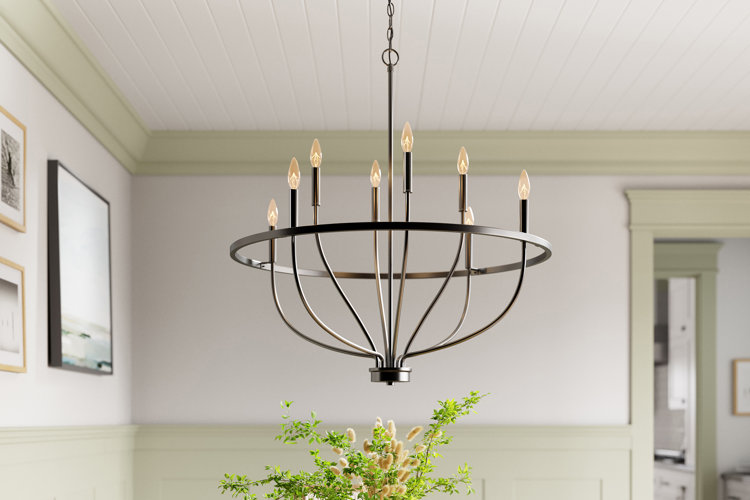
Knowing how to install a ceiling light can help you refresh your space and add eye-catching style overhead. Even though installing your own light fixture may seem like an intimidating task, we break it down into simple, manageable steps.
Important Safety Note
If you don't have experience with electrical wiring and light fixture installation, we highly recommend hiring a licensed electrician. Check the box for professional installation on a light fixture's product page at checkout, and we'll connect you with a licensed professional to complete the setup for you.
Quick Answer: Install a Ceiling Light Fixture in 8 Steps
If you need a fast overview of the main installation workflow, follow this quick sequence:
Turn off power at the main breaker panel and test the wires to verify zero current.
Remove the old fixture, unscrewing the canopy and disconnecting wire connectors.
Inspect and secure the junction box and mounting bracket to the ceiling.
Prep wires by stripping roughly 1 inch of insulation from fixture conductors if needed.
Connect house wires by matching colors (black to black, white to white, ground to ground).
Mount the fixture base or canopy to the electrical box, tucking wires safely inside.
Install recommended lightbulbs matching the fixture's stated wattage ratings.
Restore power at the circuit breaker and test your wall switch.
Before You Begin (Safety, Tools & Sizing)
Turn Off Power & Test the Circuit
Locate your main electrical panel and switch off the circuit breaker controlling the room. If the circuits aren’t clearly labeled, turn on the room's current lights and switch breakers off one by one until the light goes dark. Flip the wall switch off as an extra precaution, and use a circuit tester on the wires before touching them.
Tools & Materials for Ceiling Light Installation
| Tool / material | Need it? | Why | Tip |
|---|---|---|---|
| Non-contact voltage tester | Required | Confirm power is off | Test before touching wires |
| Phillips & flat screwdrivers | Required | Bracket & canopy screws | Magnetized tips help |
| Wire strippers | Required | Clean conductor ends | Don’t nick copper |
| Wire connectors / wire nuts | Required | Secure splices | Match connector size |
| Electrical tape | Recommended | Extra wrap on nuts | After connectors seat |
| Step stool or ladder | Required | Safe ceiling access | Have a spotter |
| Safety glasses | Recommended | Debris / wire ends | Wear while wiring |
| Light bulbs | Required | Match socket & wattage | Check fixture max W |
Choose & Measure Your Fixture
From chandeliers to flush mounts, selecting the right scale prevents awkward placement.
- Find Your Style: Explore our guide on Types of Ceiling Lights: How to Choose The Right One.
- Get Exact Measurements: Read our step-by-step instructions on How to Measure for a Ceiling Light.
- Pendant Tips: Learn everything about pendant designs in our detailed Guide to Pendant Lights.
1. Remove the Old Fixture
Take off decorative covers, shades, or globes, and unscrew lightbulbs. Carefully detach the canopy from the ceiling to access the junction box. Disconnect the wire nuts and separate the wires, keeping a hand underneath to support the weight of the old fixture.
2. Prep the Mounting Bracket
Examine the ceiling junction box. Secure any loose screws holding the box to the ceiling joist. Fasten your new fixture’s universal mounting bracket to the junction box using the provided machine screws.
3. Connect the Wires
Twist corresponding bare wire ends together clockwise:
- Hot: Black fixture wire to Black house wire
- Neutral: White fixture wire to White house wire
Ground: Bare copper or green fixture wire to the copper ground wire and/or grounding screw on the bracket.
Cap each pair firmly with wire connectors and wrap with electrical tape for an airtight seal.
4. Secure the Canopy & Hang
Carefully push the capped wires up into the electrical box, taking care not to pinch them. Raise the canopy or base flush against the ceiling and fasten it using the mounting screws or cap nuts provided.
5. Install Bulbs & Restore Power
Screw in recommended bulbs (LEDs offer better energy efficiency and longer lifespan). Head to your electrical panel, restore circuit power, and flip the light switch on to verify your installation.
Ceiling Light Wire Colors (Quick Reference)
| Wire | Typical role | Connect to | Notes |
|---|---|---|---|
| Black | Hot | Fixture black / hot | Never skip breaker shutoff |
| White | Neutral | Fixture white / neutral | Match color to color |
| Bare copper / green | Ground | Ground screw / green wire | Critical for safety |
| Red (if present) | Second hot / switch | Per fixture instructions | Common with 3-way switches |
Understanding how to match fixture wires to house wiring ensures a safe, proper installation:
- Hot Wire (Black or Red): Carries electrical current from your breaker panel to the fixture. Connect the fixture’s black (or smooth-insulated) wire to the house black or red wire.
- Neutral Wire (White): Completes the electrical circuit, returning power safely back to the panel. Connect the fixture’s white (or ribbed/grooved-insulated) wire to the house white wire.
- Ground Wire (Bare Copper or Green): Protects against power surges and electrical shock hazards. Connect the fixture’s bare copper or green wire directly to the house bare copper/green wire, or wrap it around the grounding screw on the mounting bracket.
How to Install Recessed Lighting (Overhead & Links)
Recessed lights sit flush with your ceiling line, creating a clean, modern aesthetic. Key installation steps involve checking joist spacing, cutting precise circular openings using a hole saw, running wire between cutouts, attaching IC-rated housings (for insulated ceilings), and mounting trim springs.
For comprehensive layout instructions and complete wiring steps:
- Learn types and features in Types of Recessed Lights: How to Choose the Right One.
- Map your room grid with our Recessed Lighting Calculator & Spacing Guide.
Track lighting delivers adjustable directional illumination, making it popular for kitchens, art displays, and task areas. Installation requires mounting a center connection plate over a junction box, leveling and anchoring track channels into ceiling studs, attaching a live-end power connector, and snapping in light heads.
Before starting a track project:
- Determine if plug-in or hardwired tracks fit your room setup.
- Map your track length across ceiling joists using drywall anchors where studs aren't present.
Where to Hang to Pendant Lights & Chandeliers
- Above Dining Tables: Position the bottom of a chandelier or pendant 30 to 36 inches above the table surface (based on an 8-foot ceiling ceiling height). Add 3 inches for every additional foot of ceiling height.
- Above Kitchen Islands: Space pendants 30 inches apart and maintain 30 to 36 inches of clearance from the countertop to the bottom of the fixture shade.
- Open Walkways & Entryways: Keep at least 7 feet (84 inches) of clearance from the bottom of the light fixture to the floor to ensure comfortable head clearance.
How to Install a Ceiling Light Fixture
Step-by-step guide to install a hanging ceiling light with existing wiring. About 90 minutes.
Supplies
- Replacement ceiling light fixture
- Wire connectors
- Light bulbs
Tools
- Non-contact voltage tester
- Screwdrivers
- Wire strippers
- Step stool or ladder
-
Turn off power
Shut off the circuit at the breaker, turn off the wall switch, and verify with a voltage tester.
-
Remove the old fixture
Support the fixture, disconnect wires, and remove the mounting bracket if replacing it.
-
Install the mounting bracket
Secure the new bracket to the junction box with the supplied screws.
-
Connect the wires
Connect black to black, white to white, and ground to ground using wire connectors.
-
Secure the canopy and hang
Tuck wires into the box, attach the canopy, and hang the fixture per the manufacturer instructions.
-
Install bulbs and restore power
Add bulbs within the fixture’s wattage rating, restore power, and test the switch.
Frequently asked questions
What tools are needed to install a hanging light?
You will need screwdrivers, wire connectors, electrical tape, wire strippers, a non-contact voltage tester, safety glasses, a step stool or ladder, light bulbs, and a helper to lift the fixture.
How do I connect wires for a ceiling light?
With power off, match wires by color: black to black (hot), white to white (neutral), and ground (bare copper or green) to the grounding screw or green wire. Secure with wire connectors and wrap with electrical tape.
What should I do before removing an old light fixture?
Turn off the circuit at the breaker panel, switch off the wall control, and confirm the wires are dead with a non-contact voltage tester before loosening any screws.
Can I install a ceiling light with existing wiring?
Yes—most DIY installs replace a fixture on an existing junction box. If there is no box, damaged wiring, or aluminum wiring, hire a licensed electrician.
How high should I hang a pendant or chandelier?
Over a table or island, the bottom of the fixture is often about 30–36 inches above the surface. Use flush or semi-flush mounts on lower ceilings so walkways stay clear.
