Sizing Your Nursery: Furniture Dimensions & Fit Guide
Plan for comfort, safety, and the right fit.
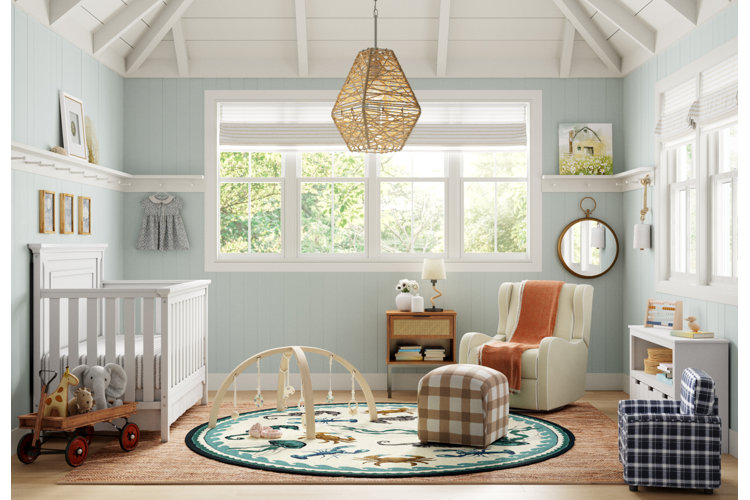
Nursery furniture needs to fit more than just your style – it should also work safely and comfortably within your space. From cribs to dressers and gliders, understanding nursery dimensions and clearance requirements can help you choose furniture that fits your room layout. Read on for our nursery sizing guide that will help you plan your layout, confirm compatibility, and avoid common measuring mistakes.
1. Learn How to Measure Nursery Furniture
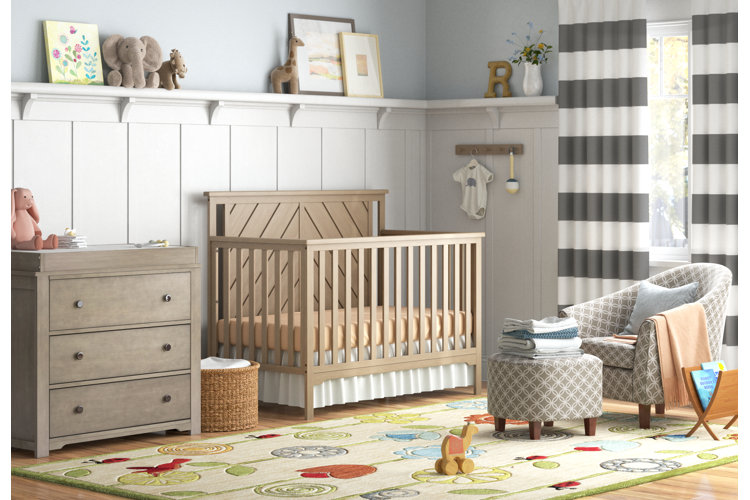
Before purchasing nursery furniture, it’s important to understand how dimensions are measured so you can predict how each piece will fit in your room. Always measure your available floor space, wall space, and any required clearance.
Different nursery items are measured slightly differently, which is why it’s helpful to understand how height, width, depth, and thickness apply across common furniture types like cribs, dressers, mattresses, and gliders.
Measuring Height
Height is measured from the floor to the highest point of the furniture. This measurement is especially important for tall items like cribs, dressers, and changing tables, which may require wall anchoring for safety and need adequate vertical clearance in the room.
Measuring Width
Width is measured side to side across the front of the furniture. This dimension helps determine how much floor or wall space an item will occupy and is especially useful when planning layouts along shared walls or between doorways.
Measuring Depth
Depth is measured from front to back. This is a key measurement for furniture with moving parts or storage, such as gliders, rockers, and dressers, which require additional clearance for rocking motion or drawer pull-out.
Measuring Mattress Thickness
Mattress thickness measures the vertical depth of the mattress itself. For crib mattresses, thickness can affect how securely the mattress fits inside the crib and how much rail height remains once the mattress is installed.
Tip!
It’s also important to measure any doorways, hallways, stairwells, or other compact spaces along the delivery path. Measuring access points along the route can help you avoid any size-related hiccups on delivery day.
2. Review Standard Nursery Furniture Dimensions
While furniture dimensions vary by style, most nursery furniture falls within standard size ranges.
Cribs
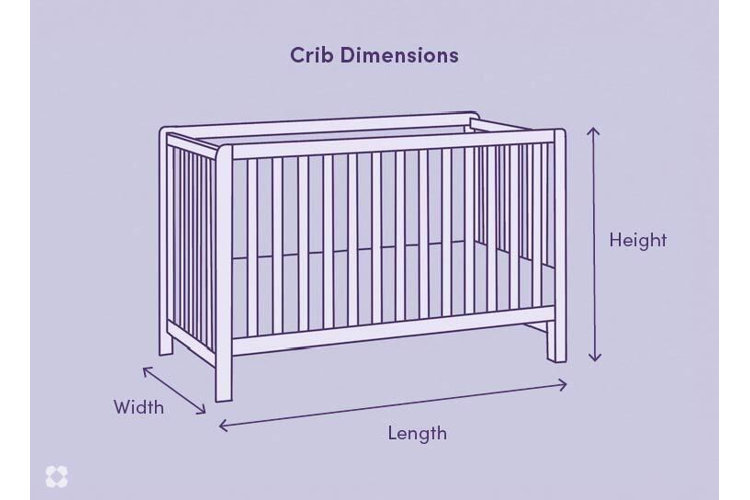
- Width: ~28 inches
- Length: ~52 inches
- Height: ~35 to 45 inches
Full-size cribs are the most common option, and are designed to accommodate standard crib mattresses. Mini cribs are smaller and better suited for compact nurseries, often measuring 37 3/8" – 38 5/8" long x 23 3/8" – 24 5/8" wide. Leave enough clearance space around the crib to comfortably reach all sides. Read our guide How to Choose a Crib: A Parent’s Guide to Finding the Right Fit for more crib sizing tips.
- Standard Size: ~27.25 inches W x 51.25 inches L
- Thickness: ~4 to 6 inches
Crib mattresses should fit snugly inside the crib frame. There should be no more than two fingers of space between the mattress and crib sides to help ensure a safe fit. Check out our guide How to Pick the Right Crib Mattress Size for additional information, including tips for measuring your crib for a mattress.
- Width: ~30 to 60 inches
- Depth: ~18 to 20 inches
- Dresser Height: ~30 to 36 inches
- Changing Table Height: ~36 to 40 inches
Some dressers are designed to double as changing stations with the addition of a changing topper. Be sure to account for extra height and wall clearance when anchoring; allow clearance space equal to the full drawer depth plus room to stand or kneel. Follow our guide Changing Table Sizes & Choosing the Right One for in-depth sizing advice.
- Width: ~26 to 32 inches
- Depth: ~34 to 38 inches
- Height: ~38 to 42 inches
Gliders and rockers require clearance space to move safely and comfortably. Always consider both upright depth and motion clearance when planning placement. Most gliders and rockers need 12 to 18 inches of clearance in front and behind, while swivel gliders may also require side clearance.
The size of your nursery will influence which furniture dimensions work best. Planning for walking paths and functional clearance can help keep the room feeling open and accessible. Make sure to leave at least 30 inches of space for clear walkways and 36 inches for a standard-size door swing.
Small Nurseries
- Consider mini cribs or narrower full-size cribs.
- Choose compact dressers with vertical storage.
- Look for slim-profile gliders to maximize limited floor space.
Medium to Large Nurseries
- Standard-size cribs and wider dressers offer more flexibility.
- Ensure furniture placement allows for easy movement around the room.
- Balance larger furniture with open floor space.
4. Check Crib & Mattress Compatibility
Not all crib and mattress combinations are interchangeable – it’s always important to confirm compatibility. Measure the interior of your crib and check the specific dimensions of the crib mattress to ensure the two are compatible.
- Mattress dimensions match the crib’s recommended size. Standard crib mattresses are designed to fit standard-size cribs and toddler beds, while mini crib mattresses are only suitable for mini cribs.
- Mattress sits flat and snug inside the crib frame. There should be no more than a 1-inch gap between the edge of the mattress and the crib.
- Mattress thickness does not interfere with crib rail height settings. Mattresses thicker than 6 inches can reduce the height of crib walls and increase the risk of your little one climbing out of the crib.
Tip!
Check out these Nursery Room Decor Ideas to welcome your baby home in style after finding the perfect furniture dimensions.
