Types of Shower Drains & How They Work
Learn about the various types of shower drains.
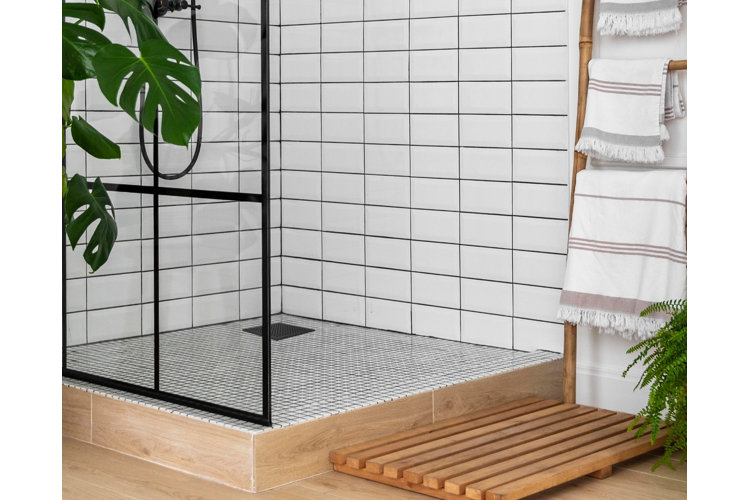
Whether you’re remodeling your shower or installing a new one, choosing the right drain for your shower requires careful consideration. Our guide covers all you need to know about shower drains so you can find one that works for your space.
Types of Shower Drains
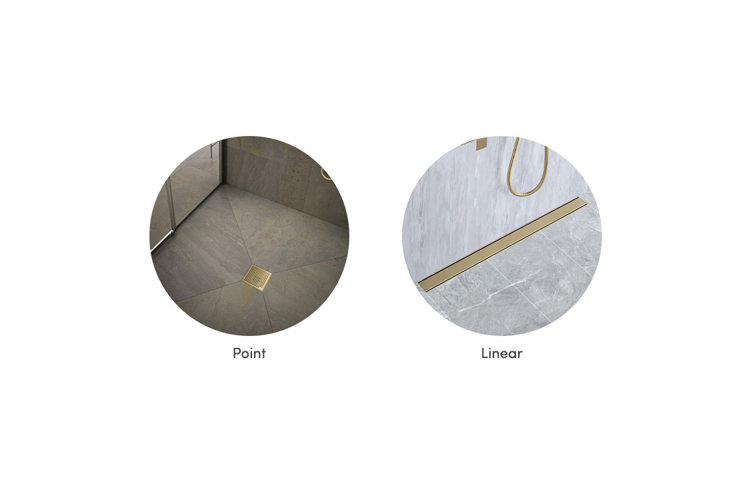
A drain is designed to divert water as you shower and prevent any moisture from seeping beneath the base and damaging your bathroom floor. The design of your shower will affect what types of shower drains are available to you, which is why it is important to plan beforehand.
There are two types of shower drains to choose from: point and linear. Both have their pros and cons, so it’s important to consider factors like compatible placement, desired appearance, and installation complexity.
Point Drains
Point drains are usually placed in the middle of the shower and are either square or circular. They come in a range of sizes and can usually work for most shower designs.
Grid Drains: These drains function similarly to a funnel by emptying water via a gradual slope from all four sides of the tiles. These drains are a common option and are most often found in older showers. Although they do not have as much drainage surface area as linear shower drains, grid drains still siphon water away quickly and efficiently.
Grid drain installation requires a little more work since the tile needs to be cut at specific angles in order to achieve the necessary drainage slope. Square grid drains are preferable over circular as the installation process is a little easier and they are more aesthetically pleasing.
Linear Drains
Linear shower drains are usually rectangle-shaped and placed on the side of the shower. They function slightly differently to the grid style, requiring only one slight slope towards the drain. Because of this slope, linear drains are best installed when you plan on remodeling your shower and may cost more to install than point drains.
Linear Grid: Linear grid drains – also called line, strip, or trench drains, come in a variety of lengths that can reach up to 72". These drains are usually installed in the floor next to the shower door, or on the opposite wall, and require only a single gentle slope toward the outlet. Due to their rectangular shape, linear shower drains offer a larger surface area to help divert water more readily while reducing the pooling of water. Not only are linear grid drains more stylish and frequently used in modern showers, they are also easier to install as they only need a single gradient, requiring less tile cutting.
Tile-In: Tile-in drains are also part of the linear shower drain style, but require a slightly different installation. Tiles are installed on top of an inset shelf to create an invisible drain grid that is hidden by the tiles. Although they still need tiles cut to size along with a single gentle slope, tile-in drains don't require as much cutting or retiling to create the funnel-like slope required for point drains.
Note that tile-in drains require frequent maintenance in order to prevent clogs. This is done by using a special "key" tool that gives you access to the drain to clean out the removable basket. Tile-in drains can also limit water flow, making them less suited to high-volume showers.
Tip!
If you are looking to fix a shower drain, read How to Fix a Shower Drain for more guidance.
